Launch offer — valid today only

Prepare for the LEED® v5 Green Associate™ Exam One Page at a Time With Every Concept Drawn on Its Own Page!

Written for the v5 exam: what changed from v4 is explained, and anything that only applies to v4 is labeled "in v4". Site vs. source energy, EPDs, LCA, prerequisites vs. credits: in your notes, they all blur together. Here every topic fits on one page, with the drawing and what you need to remember. 77 illustrated pages.

YES, I WANT THE ILLUSTRATED BOOK

🔒 Secure checkout · PDF by email · 30-day guarantee

One topic per pageOne topic per page: the drawing shows it, the boxes tell you what to remember
77 illustrated pages10 parts, from the exam itself to the final review
Up-to-date sourcesGBCI Candidate Handbook (Sept. 2026) and USGBC's LEED v5 information

This Is What the Pages You Will Study Look Like

One topic per page, the drawing that shows you how it works, and the boxes with what you need to know:

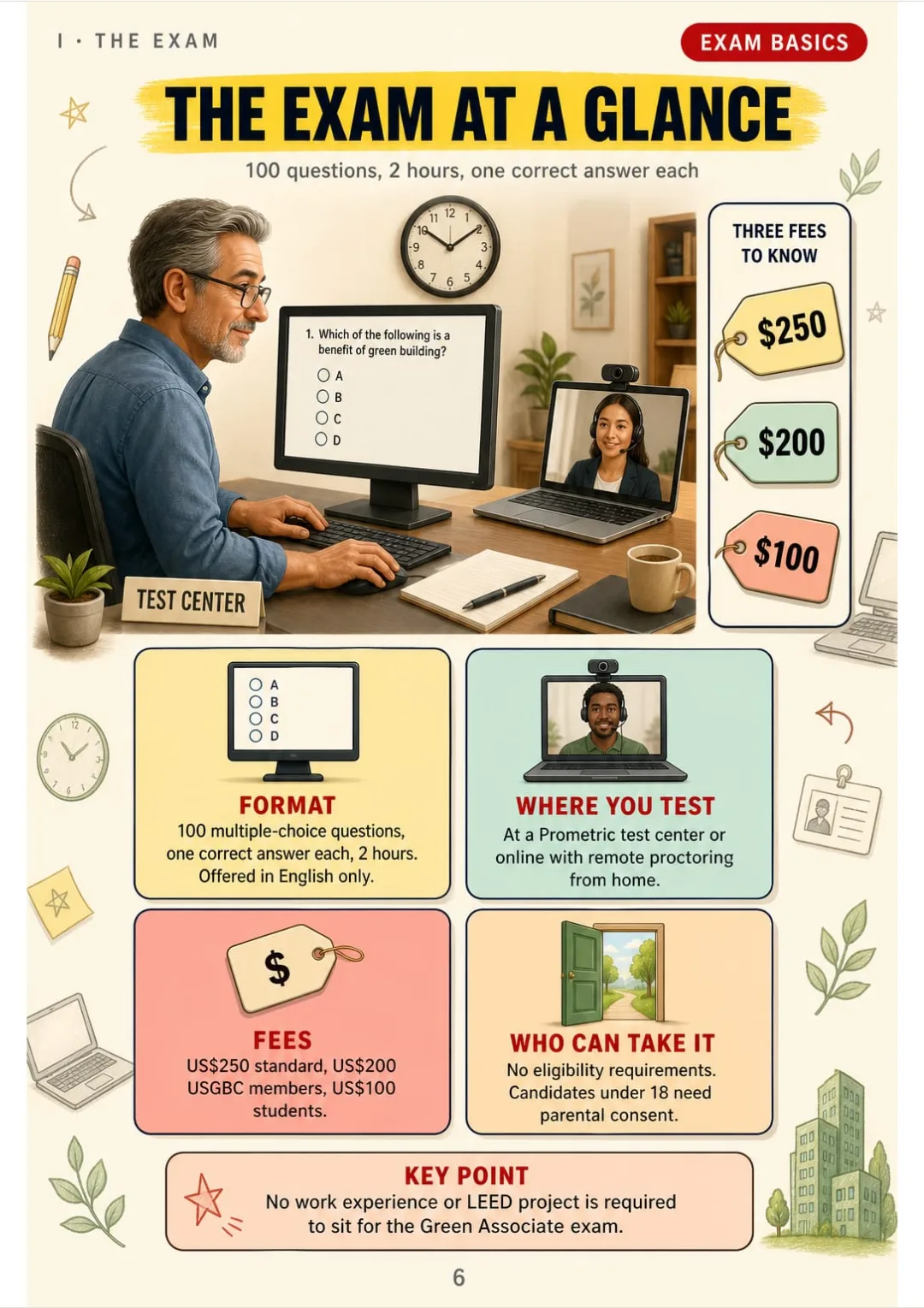
100 questions · 2 hours · US$250 standard · no eligibility requirements
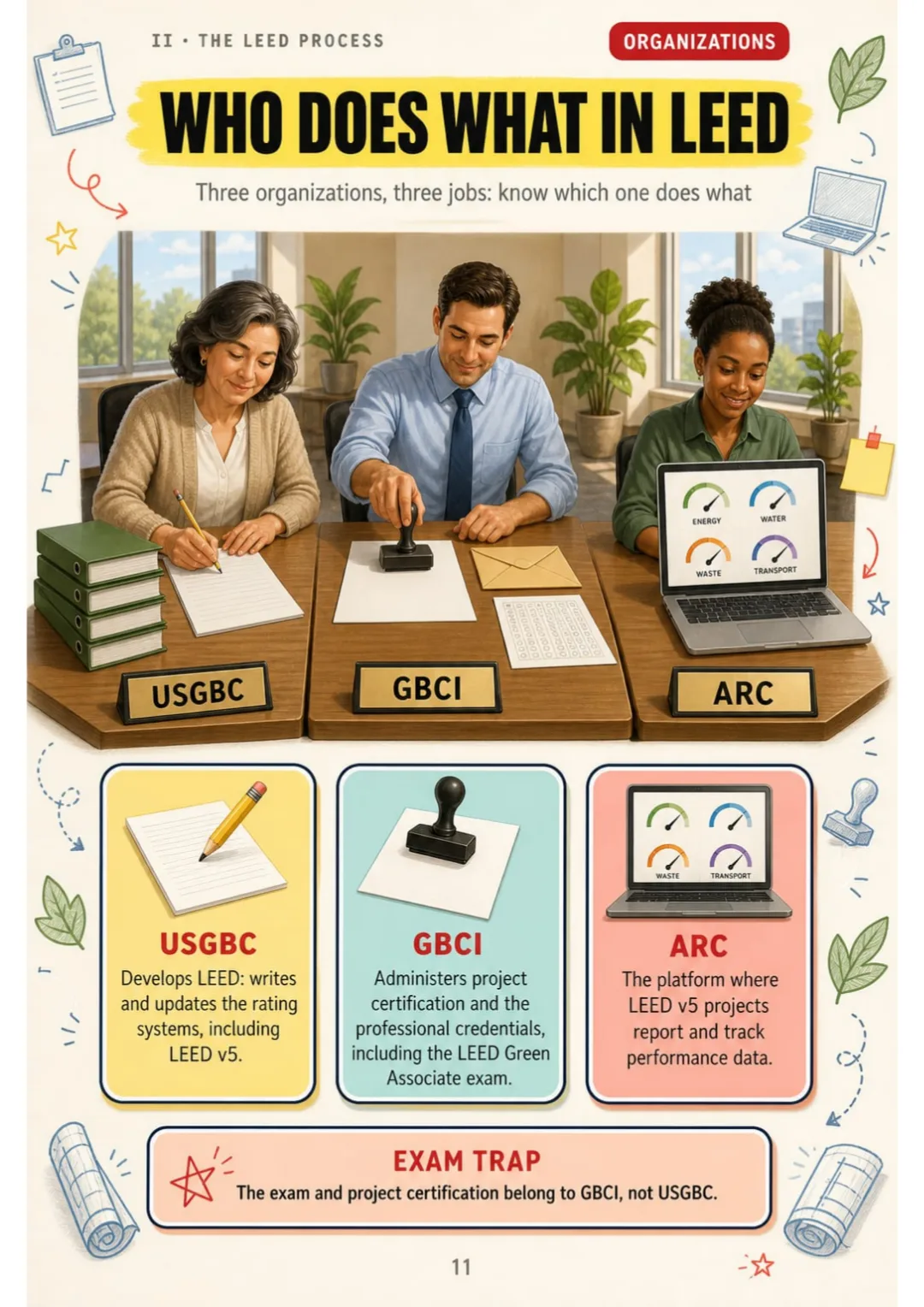
USGBC develops LEED · GBCI certifies projects and runs the exam · Arc tracks performance
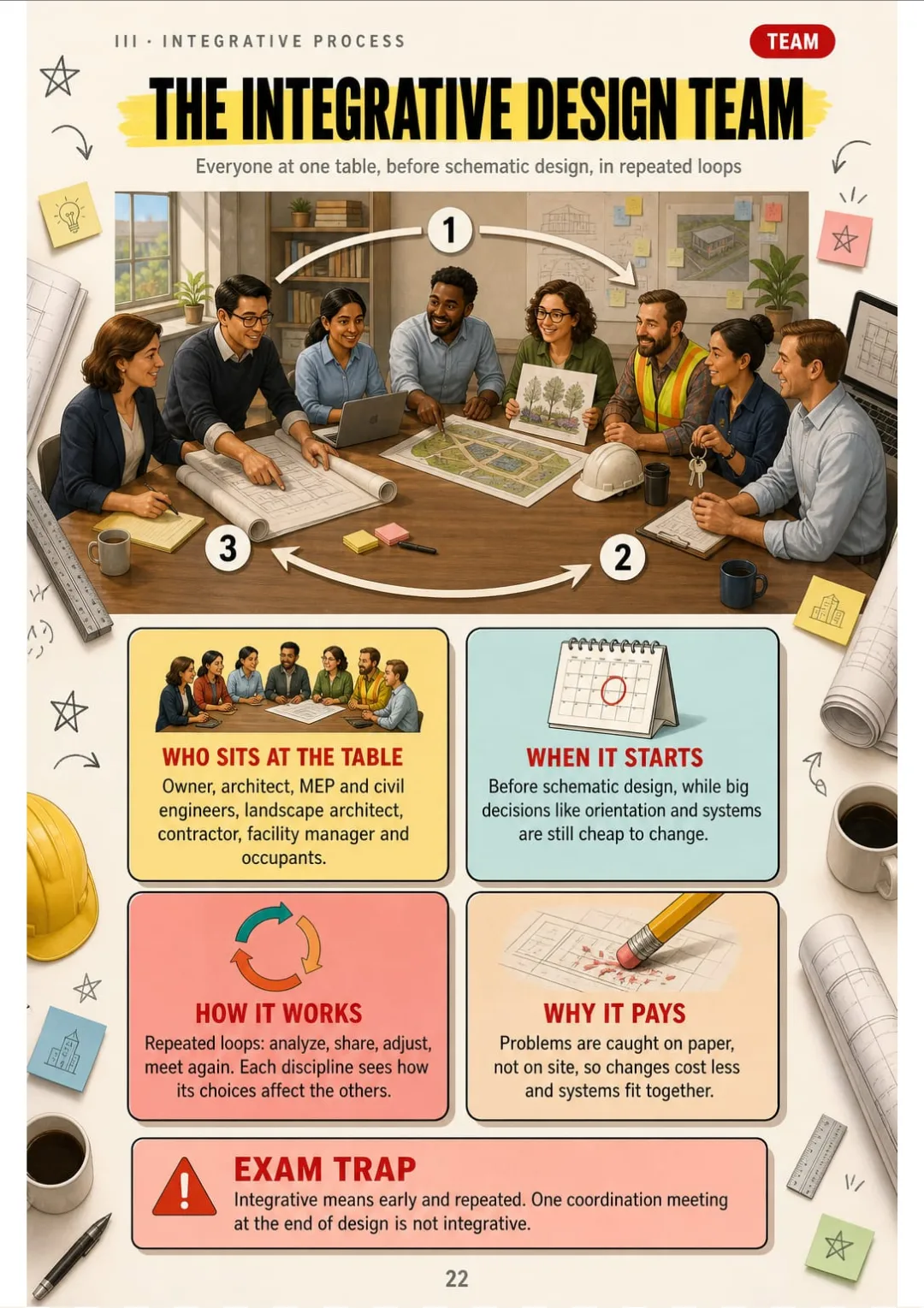
Owner, designers, contractor, facility manager and occupants at one table, before schematic design
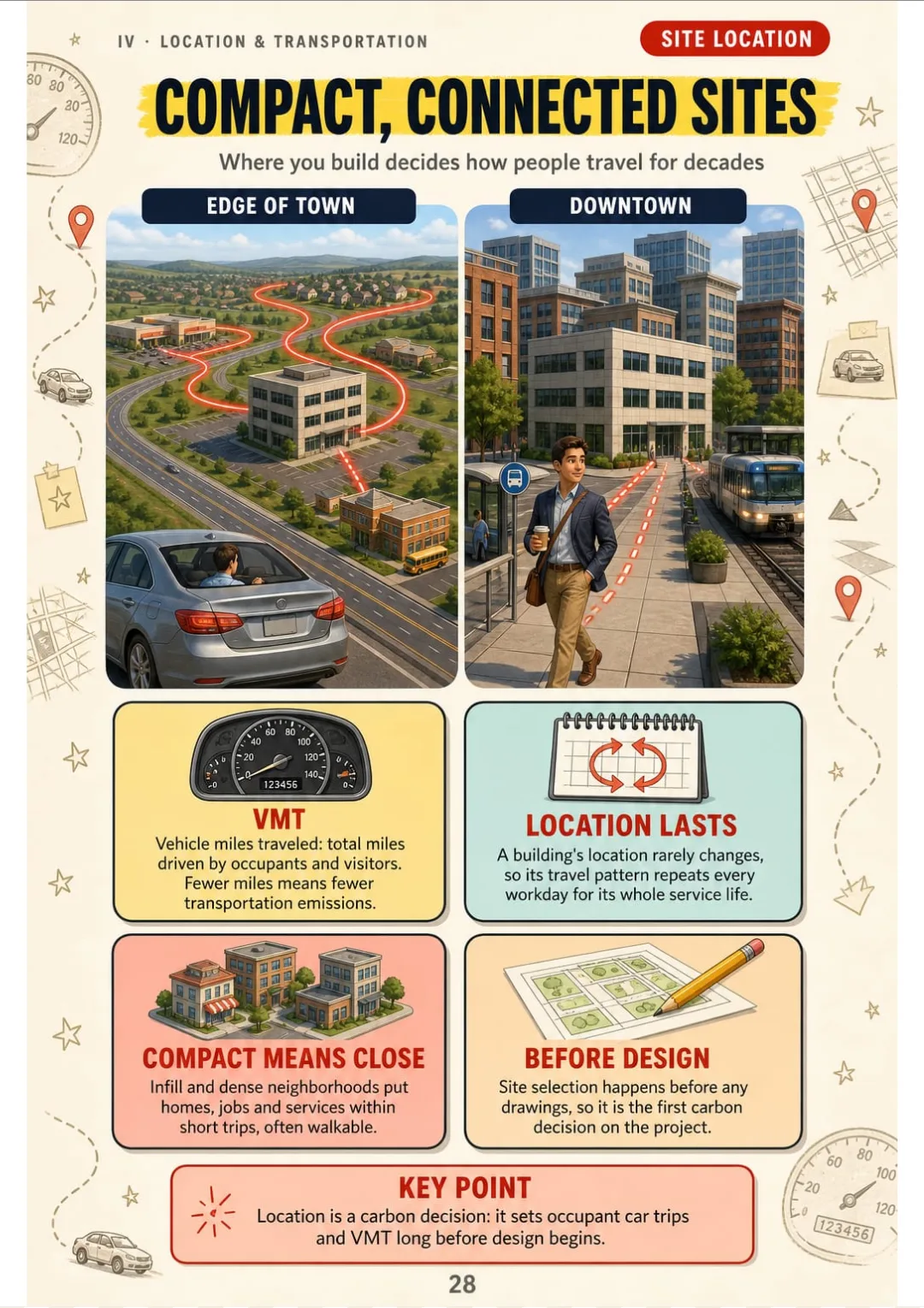
Edge of town vs. downtown: how location sets vehicle miles traveled for decades.
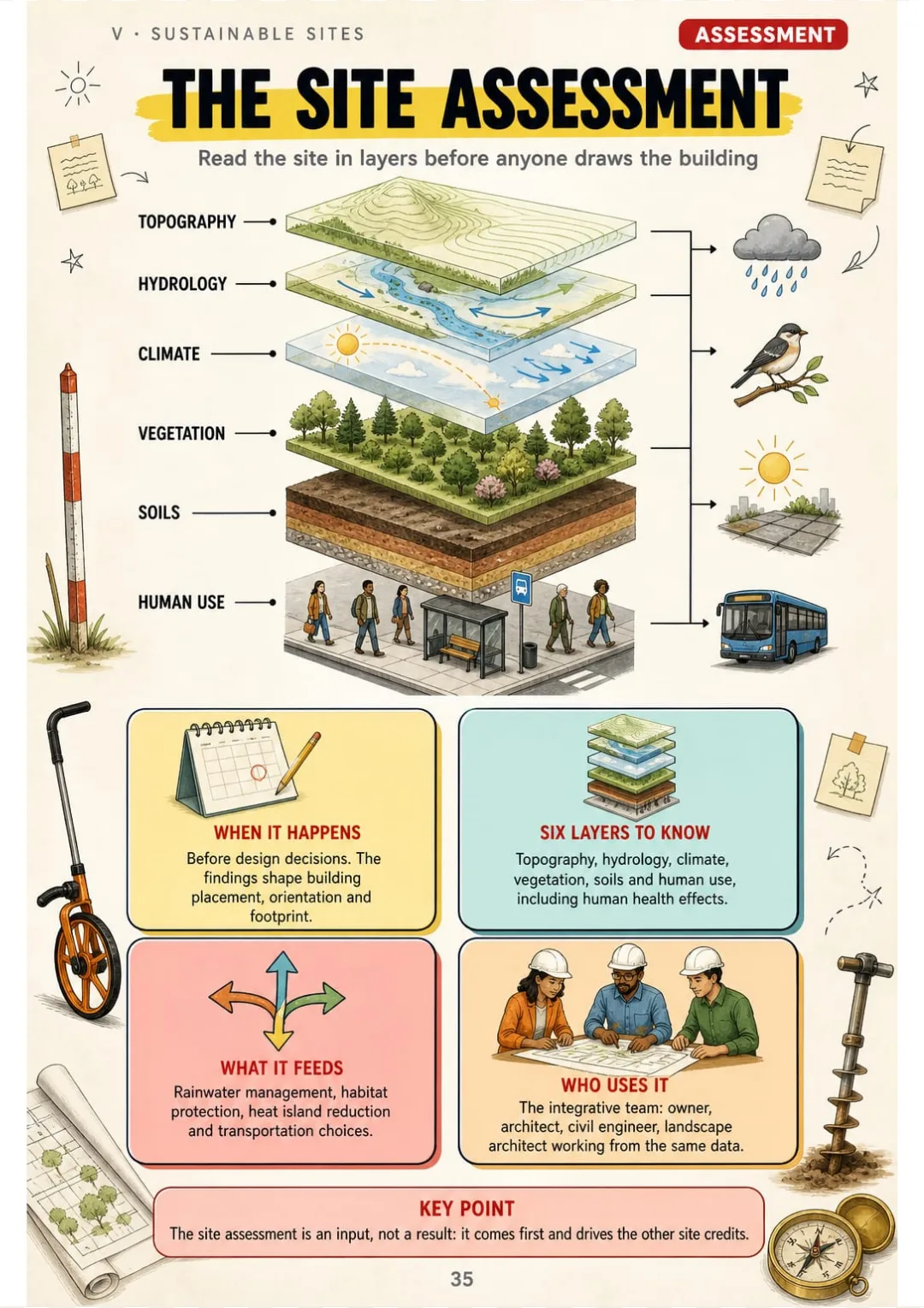
Topography, hydrology, climate, vegetation, soils, human use: six layers, studied before design.
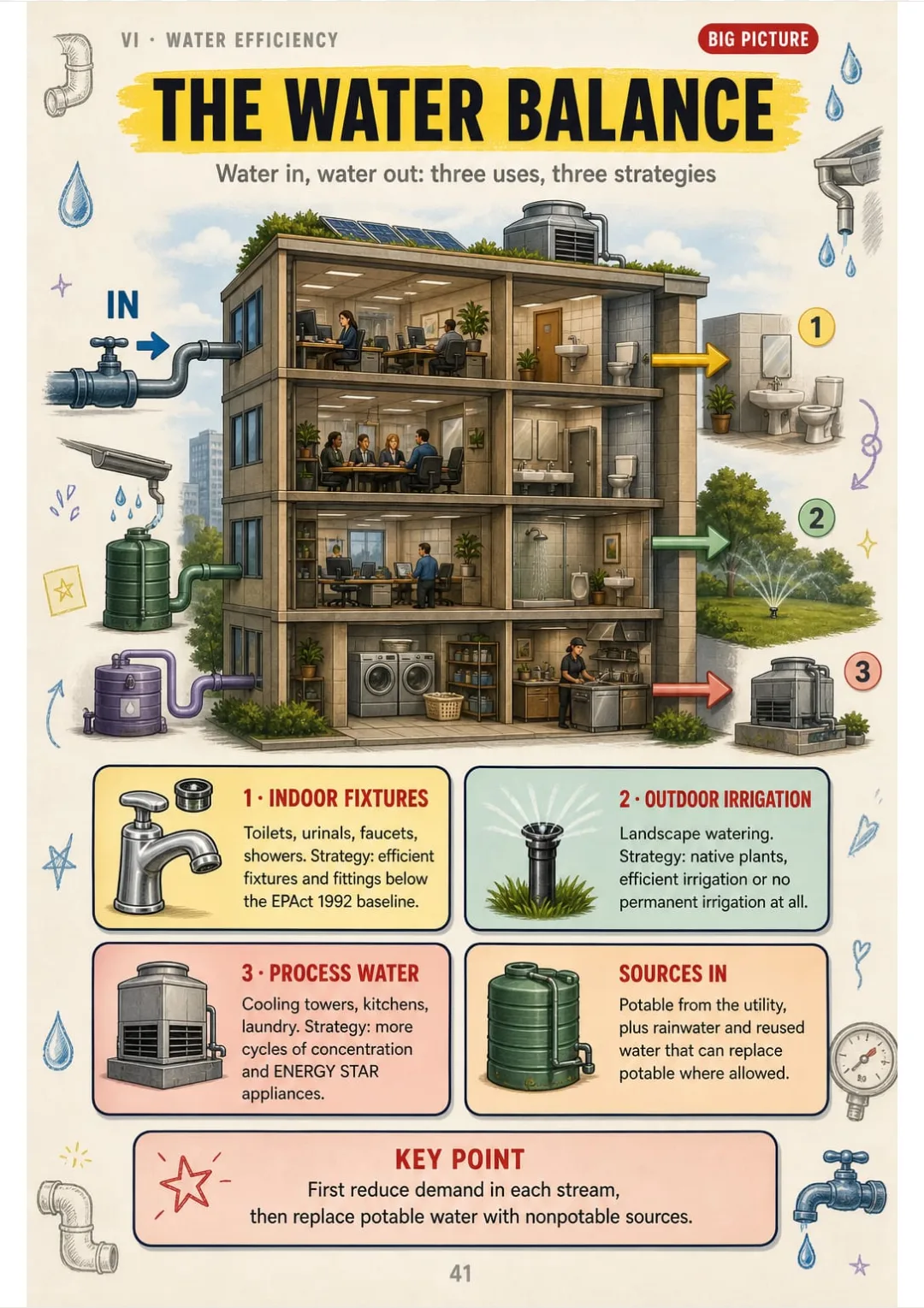
Water in (potable, rain, reused) and water out through three streams, each with its own strategy.
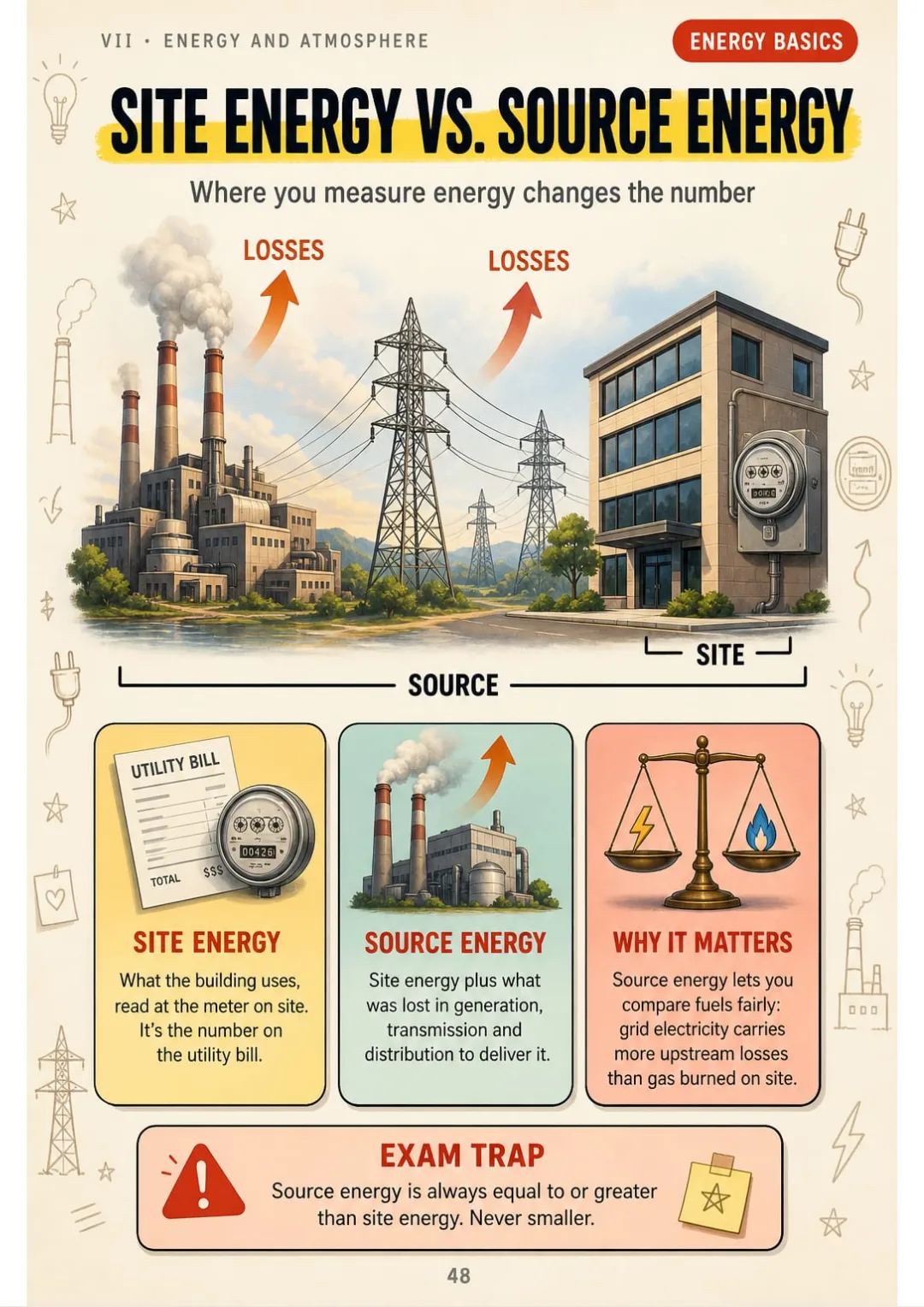
Site energy = the meter. Source energy = the meter + generation and transmission losses.
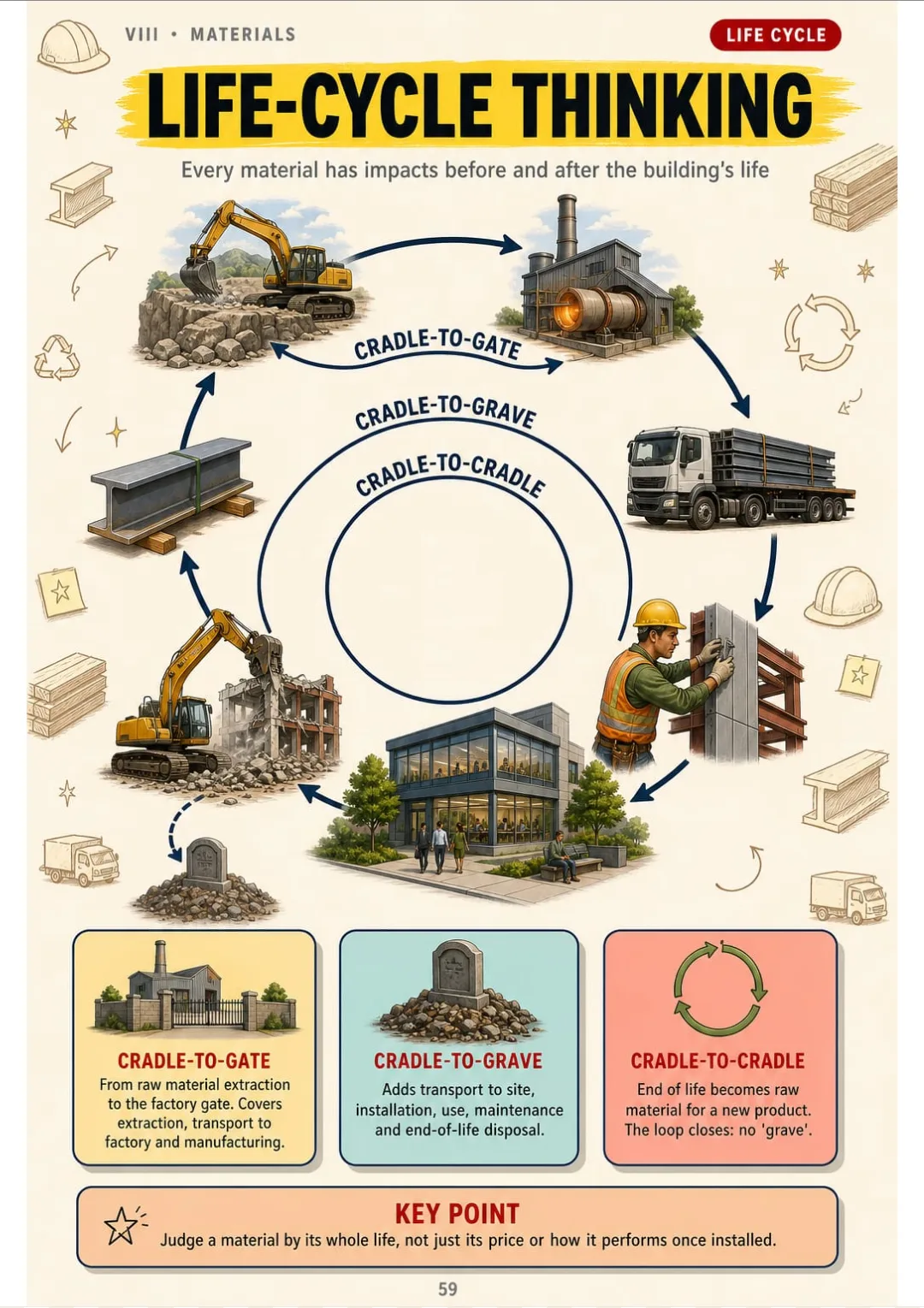
Cradle-to-gate stops at the factory; cradle-to-cradle closes the loop.

Swipe to see more →

These are real pages from the book. The table of contents is the full one: 10 parts and 72 topics.

It's Not That You Can't Remember. It's That No One Put It in Order for You.

You've read the same section three times: who belongs on the integrative design team and when they meet. You close the study guide...

...and you can't say who sits at the table or whether it happens before or after schematic design. It was just lines of text.

Owner, designers, contractor, facility manager and occupants at one table, before schematic design

Here the integrative design team is one page: owner, designers, contractor, facility manager and occupants at one table, before schematic design.

And on the pages next to it, every concept gets its own: early energy and water analysis, the carbon assessment, the climate resilience assessment, the human impact assessment and the charrette.

First you understand why it's done this way. Then the order sticks on its own.

SEE THE DIFFERENCE

Stop Memorizing Acronyms You Can't Picture

THIS
  • Pages and pages of dense text
  • Concepts without a single drawing
  • On exam day, you don't know where to start
The U.S. Green Building Council® (USGBC®), a nonprofit organization, is responsible for the development and ongoing revision of the LEED rating systems and their associated reference materials, whereas Green Business Certification Inc. (GBCI) functions as the independent entity that administers third-party project certification reviews as well as the professional credentialing examinations, including the Green Associate exam; the ongoing collection, benchmarking and reporting of building performance data, in turn, may be conducted by projects through the Arc platform, independently of the initial certification process.
FOR THIS
  • Every concept drawn
  • One topic per page, with the rules in boxes
  • You remember it because you've seen it
USGBC develops LEED · GBCI certifies projects and runs the exam · Arc tracks performance
CONTENTS

Take a Look at the 10 Parts and 72 Topics

The exam, the LEED process, integrative process, location and transportation, sustainable sites, water, energy, materials, indoor environmental quality and a final review: 72 illustrated topic pages in a 77-page book

IThe Green Associate Exam · pp. 6-10
  1. The Exam at a Glance
  2. Eight Domains, Weighted
  3. From v4 to v5: What Changed
  4. Scaled Score and Question Types
  5. How to Use This Book
IIThe LEED Process · pp. 11-21
  1. Who Does What: USGBC, GBCI and Arc
  2. Rating System Families
  3. Choosing the Right Rating System
  4. Prerequisites vs. Credits
  5. Certification Levels and Points
  6. Platinum in v5: More Than Points
  7. Minimum Program Requirements
  8. From Registration to Certification
  9. The Three Impact Areas of v5
  10. Project Priorities: Innovation and Region
  11. Keeping the Credential: CE Hours
IIIIntegrative Process, Planning and Assessments · pp. 22-27
  1. The Integrative Design Team
  2. Early Analysis: Energy and Water
  3. The Carbon Assessment
  4. The Climate Resilience Assessment
  5. The Human Impact Assessment
  6. Owner Goals and the Charrette
IVLocation and Transportation · pp. 28-34
  1. Compact, Connected Sites
  2. Sensitive Land and Previously Developed Sites
  3. Access to Transit
  4. Bicycle Facilities
  5. Parking and a Smaller Footprint
  6. Electric Vehicles
  7. Walkable Streets and Diverse Uses
VSustainable Sites · pp. 35-40
  1. The Site Assessment
  2. Construction Activity Pollution Prevention
  3. Protect and Restore Habitat
  4. Open Space
  5. Rainwater Management
  6. Heat Island and Light Pollution
VIWater Efficiency · pp. 41-47
  1. The Water Balance
  2. Indoor Water Use Reduction
  3. Fixtures and Flow Rates
  4. Outdoor Water and Landscaping
  5. Cooling Towers and Process Water
  6. Metering Water
  7. Nonpotable Water Sources
VIIEnergy and Atmosphere · pp. 48-58
  1. Site Energy vs. Source Energy
  2. Operational Carbon
  3. Commissioning: Fundamental and Enhanced
  4. Minimum Energy Performance
  5. Energy Modeling: Baseline vs. Proposed
  6. Electrification
  7. Renewable Energy On-Site and Off-Site
  8. Grid Harmony and Demand Response
  9. Energy Metering
  10. Refrigerants and the Ozone Layer
  11. Envelope and Peak Thermal Loads
VIIIMaterials and Resources · pp. 59-66
  1. Life-Cycle Thinking
  2. Embodied Carbon
  3. Whole-Building Life-Cycle Assessment
  4. Environmental Product Declarations
  5. Material Ingredients and Health
  6. Responsible Sourcing
  7. Construction and Demolition Waste
  8. Storing and Collecting Recyclables
IXIndoor Environmental Quality · pp. 67-74
  1. Ventilation and Outdoor Air
  2. Tobacco Smoke and Entryways
  3. Low-Emitting Materials
  4. Construction Indoor Air Quality
  5. Thermal Comfort
  6. Daylight and Quality Views
  7. Interior Lighting
  8. Acoustic Performance
XFinal Review · pp. 75-77
  1. Synergies and Trade-offs
  2. Frequent Mix-Ups Side by Side
  3. Exam Day Plan

What If Every Topic Fit on a Single Page?

What if every exam topic fit on a single page?

Instead of rereading half a page about site energy and source energy without being able to see the difference...

...you open the page and find the meter on one side and the power plant and transmission lines on the other, with the losses drawn in between.

Topography, hydrology, climate, vegetation, soils, human use: six layers, studied before design.

And the water balance, rainwater management, commissioning, embodied carbon and ventilation turn into drawings and tables you read at a glance.

You stop repeating and start understanding.

That's what LEED Green Associate, Illustrated does: 72 illustrated topic pages in 10 parts, with the frequent mix-ups side by side and an exam day plan at the end. What you see in order, you remember.

Because what your brain sees organized, it remembers.

Here Is What You Get with LEED Green Associate, Illustrated:

Ipp. 6-10

The Green Associate Exam

The exam at a glance, the eight domains and their weight, what changed from v4 to v5, the scaled score and question types, and how to use this book.

IIpp. 11-21

The LEED Process

Who does what (USGBC, GBCI, Arc), rating systems and how to choose one, prerequisites vs. credits, certification levels, minimum program requirements, registration to certification, impact areas, Project Priorities and CE hours. No more mixing up who does what or which step comes first.

IIIpp. 22-27

Integrative Process, Planning and Assessments

The integrative design team, early energy and water analysis, the carbon, climate resilience and human impact assessments, and owner goals and the charrette.

IVpp. 28-34

Location and Transportation

Compact, connected sites, sensitive land and previously developed sites, access to transit, bicycle facilities, parking, electric vehicles and walkable streets.

Vpp. 35-40

Sustainable Sites

The site assessment, construction activity pollution prevention, habitat, open space, rainwater management, and heat island and light pollution.

VIpp. 41-47

Water Efficiency

The water balance, indoor water use reduction, fixtures and flow rates, outdoor water, cooling towers and process water, metering and nonpotable sources.

VIIpp. 48-58

Energy and Atmosphere

Site vs. source energy, operational carbon, commissioning, minimum energy performance, energy modeling, electrification, renewables, grid harmony, metering, refrigerants and the envelope.

VIIIpp. 59-66

Materials and Resources

Life-cycle thinking, embodied carbon, whole-building LCA, EPDs, material ingredients, responsible sourcing, construction and demolition waste, and recyclables.

IXpp. 67-74

Indoor Environmental Quality

Ventilation and outdoor air, tobacco smoke and entryways, low-emitting materials, construction IAQ, thermal comfort, daylight and views, interior lighting and acoustics.

Xpp. 75-77

Final Review

Synergies and trade-offs, the frequent mix-ups side by side, and an exam day plan.

At the end of the book: The frequent mix-ups side by side and an exam day plan.
And That Is Not All: 2 More Books, Free

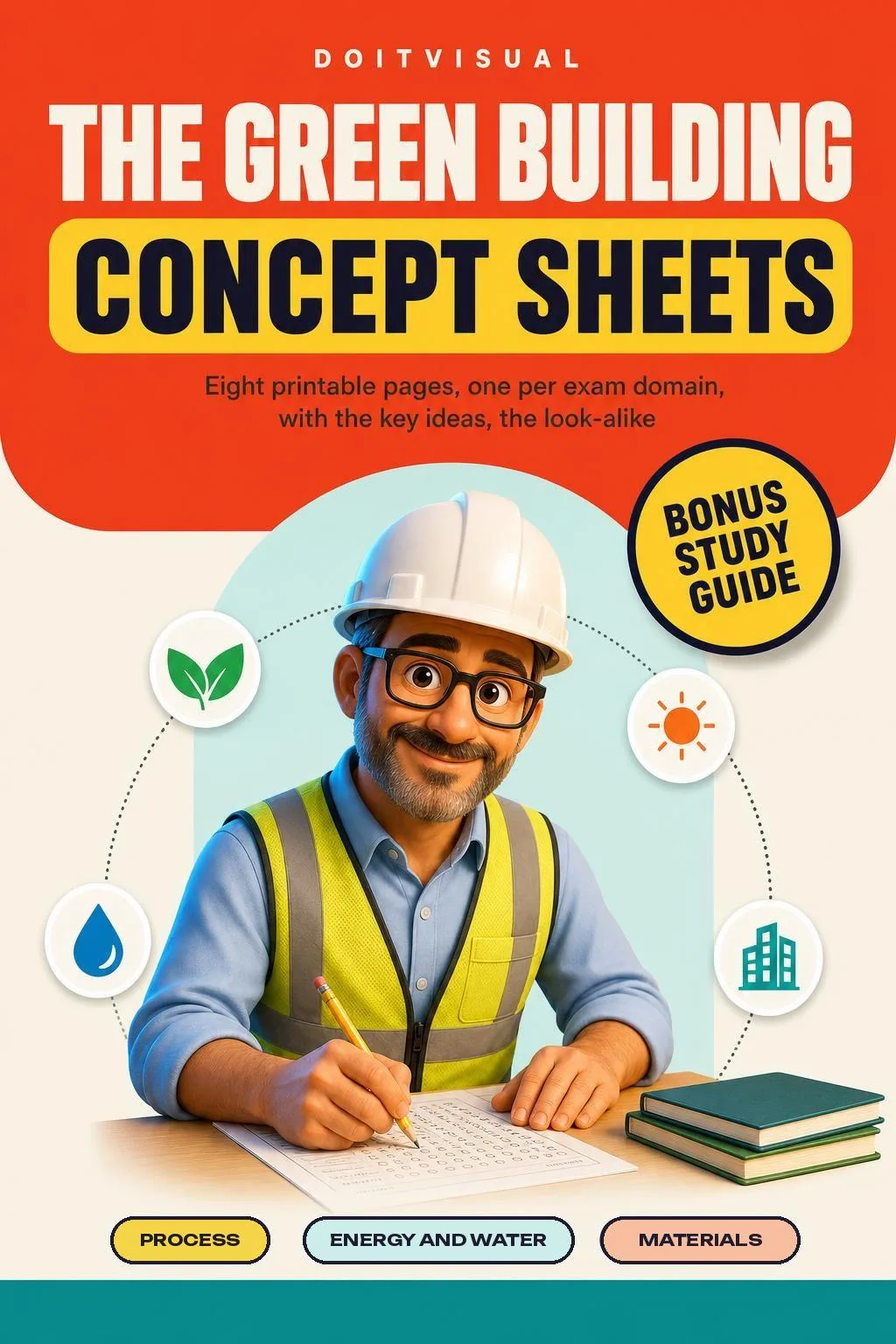
The Green Building Concept Sheets

BONUS 1: «The Green Building Concept Sheets»

Value on its own: US$ 17.90

Eight printable pages, one per exam domain, with the key ideas, the look-alike pairs and the exam numbers, so you can review a whole domain at a glance.

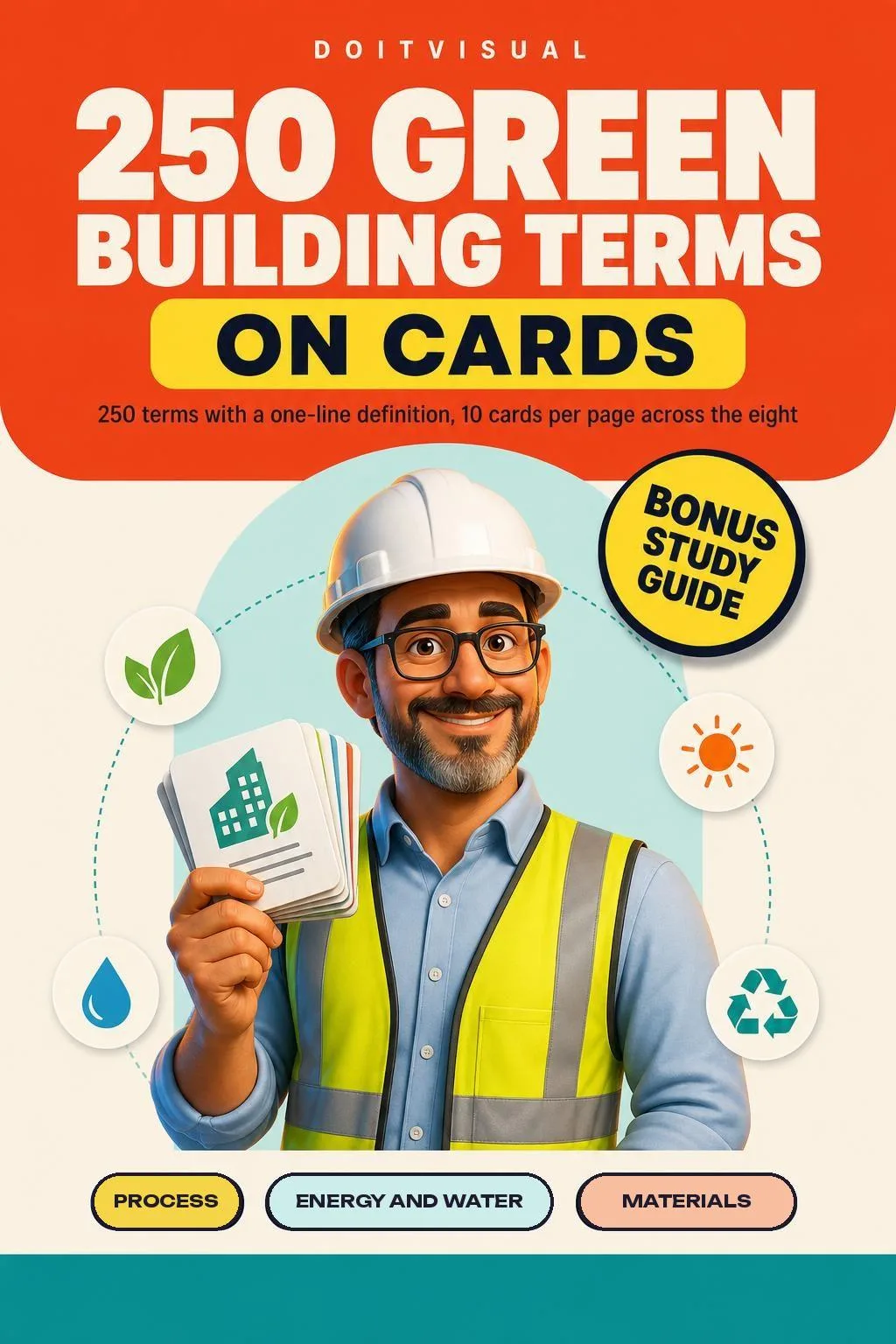
250 Green Building Terms on Cards

BONUS 2: «250 Green Building Terms on Cards»

Value on its own: US$ 14.90

250 terms with a one-line definition, 10 cards per page across the eight domains, so you can quiz yourself and catch the terms you still mix up.

LEED Green Associate, Illustrated + 2 Free Books

  • LEED Green Associate, Illustrated: 77 illustrated pagesUS$ 63
  • BONUS 1: The Green Building Concept SheetsUS$ 17.90
  • BONUS 2: 250 Green Building Terms on CardsUS$ 14.90
  • High-resolution PDF to printIncluded
Total value US$ 95.80
YOUR PRICE:
US$ 27
You save US$ 68.80
YES, I WANT LEED GREEN ASSOCIATE, ILLUSTRATED FOR US$ 27

📄 This is a digital PDF book sent to your email: nothing is printed or shipped.

Secure purchaseEncrypted payment30-day guarantee

PDF by email: LEED Green Associate, Illustrated reaches your inbox as a PDF, and the two free books come by email too. One-time payment, no installments or hidden costs.

Is This Book for You?

You're studying for the exam

You're studying for the exam

The eight domains, one concept per page, to review at night or on the weekend around work and family.

Your exam date is close

Your exam date is close

A final review section with the frequent mix-ups side by side and an exam day plan. Anything that only applies to v4 is labeled "in v4".
You already work in buildings

You already work in buildings

The meter, the cistern, the bioswale: things you see on the job, drawn and named the way the exam uses them. You move fast through what you know and stop on the pairs that look alike.

To Sum Up: Here Is What You Get

US$ 95.80US$ 27
YES, I WANT LEED GREEN ASSOCIATE, ILLUSTRATED FOR US$ 27

📄 This is a digital PDF book sent to your email: nothing is printed or shipped.

30DAYS
GUARANTEE

30-Day Guarantee

30-day guarantee: tell us what didn't work and we'll refund 100%.

You have 30 days to try LEED Green Associate, Illustrated and the two bonus books. If it doesn't work for you, tell us what didn't work and we'll refund 100% of what you paid. One-time payment, no subscription.

Frequently Asked Questions

How do I get the material?

You get an email with LEED Green Associate, Illustrated as a high-resolution PDF, to read on your phone or print. The two bonus books, The Green Building Concept Sheets and 250 Green Building Terms on Cards, also come as PDFs by email, to the address you enter at checkout.

Is it a monthly payment or a one-time payment?

A one-time payment of US$ 27. No installments, no subscription.

Who is it for?

For anyone preparing for the LEED v5 Green Associate exam: people in architecture, engineering, construction, real estate, facilities or sustainability, including those who started with v4 material. It's not a beginner's intro to buildings: if you already work on projects, you move fast through what you know and stop on the pairs the exam likes to mix up, like site vs. source energy or cradle-to-gate vs. cradle-to-cradle. Check the table of contents above to see every topic.

What sources is it based on?

The LEED Green Associate Candidate Handbook (GBCI, September 2026 edition) and the LEED v5 information published by USGBC at usgbc.org, checked on November 15, 2026. It's written for v5: anything that only applies to v4 is labeled "in v4". Credit-by-credit points and thresholds are not printed, because they change with the LEED v5 addenda: the pages tell you to confirm them in the current LEED v5 reference guide. GBCI updates the exam every year against the LEED addenda, so check the current Candidate Handbook before you test.

Is this official material?

No. It's an independent study book. This book's publisher, doitvisual.com, is not affiliated with the U.S. Green Building Council® or Green Business Certification Inc.™ and does not administer the LEED AP/LEED® Green Associate™ program. USGBC and GBCI do not endorse or recommend the products or services offered by doitvisual.com.

Does it replace a prep course or the reference guides?

No. It's a visual review to use alongside the Candidate Handbook, the LEED v5 reference guides and any prep course you're taking. It does not grant CE hours, a certificate or any credential: the Green Associate credential comes only from passing the GBCI exam.

Are the practice questions the ones on the real exam?

No. Real exam questions are confidential, and no one can sell them. The book's EXAM TRAP boxes show the frequent mix-ups side by side, and the 250 term cards let you quiz yourself. Full practice tests are not part of the US$ 27 book: you can add the Exam Week Plan + 4 Practice Tests at checkout. Every question in them is written by us, not taken from the exam.

Can I print it?

Yes. It's a high-resolution PDF: print the whole book or just the pages you need, and keep the concept sheets on hand.

What if I don't like it?

You have 30 days. Tell us what didn't work and we'll refund 100%.

One Last Thing Before You Decide...

You don't have to reread the same page hoping it sticks this time.

You don't have to memorize acronyms you can't picture.

And you definitely don't have to walk into the exam not knowing where to start.

There's a simpler way. And it's one click away. Now it's your turn.

One-time payment: US$ 27 · Guarantee: 30 days · PDF by email

YES, I WANT LEED GREEN ASSOCIATE, ILLUSTRATED FOR US$ 27

📄 This is a digital PDF book sent to your email: nothing is printed or shipped.